Showing posts with label MATH. Show all posts

Monday, June 07, 2021

God's Thoughts

 "Those laws [of nature] are within the grasp of the human mind; God wanted us to recognize them by creating us after his own image so that we could share in his own thoughts."

Also given as:

"I am merely thinking God's thoughts after Him."

~ Johannes Kepler (1571-1630)

Sunday, March 31, 2019

Thursday, March 01, 2018

Pi Day is Coming!

PI DAY OPPORTUNITIES


Hello MJC math colleagues!  Would you be willing to help out with pi-related activities at the upcoming Pi Day event?  MJC has been hosting Pi Day since 2015.  It's been very well attended, as you can see below:


And, of course, pizza pie and dessert pi are available!  Food is a big draw - especially for college students!


ACTIVITIES

Pi Chain


Buffon's Needle


Digits of Pi Memorization Contest


(The winner - below - made it to 202 digits!)


We also have activities for "discovering" pi (by measuring circumferences and diameters of circular objects) and seeing amazing pi-related surprises!


It's also a great excuse to wear your cool math tee-shirts!


Wednesday, January 17, 2018

Penrose Connections


Two years ago I was granted a sabbatical to study the history of mathematics in northern Europe from the Renaissance to the present, and I kept a blog at this link about that trip.  Two months ago opportunity came up to revisit one of the locations I had spent time in on sabbatical, the amazing city of Edinburgh.

Even though I was there "just for fun" this time, I couldn't help but look into some of the things related to math that I had missed initially.  One mathematician I'm quite interested in is Roger Penrose whose "impossible shapes" made it into the movie Inception.

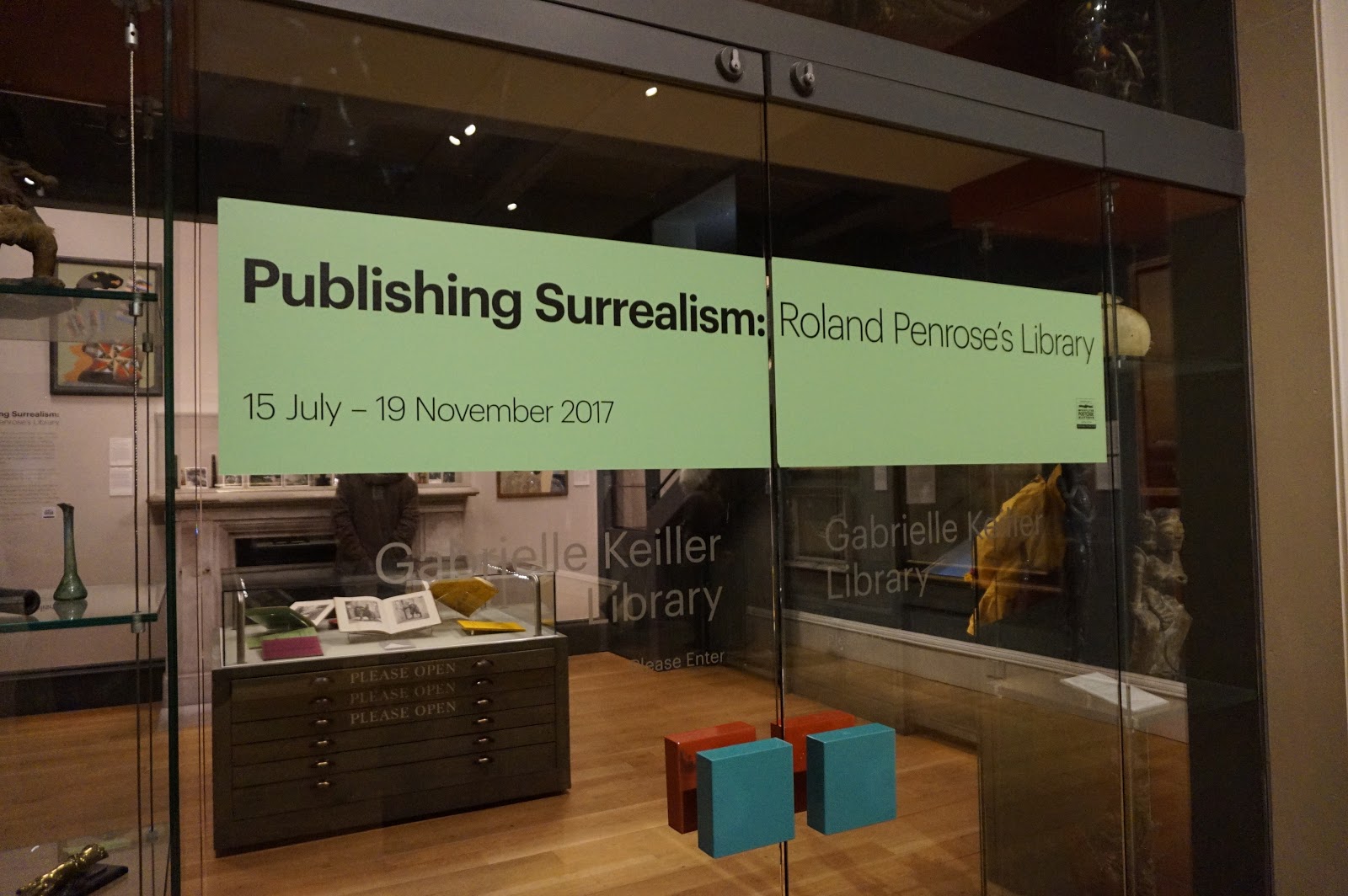
Penrose's mathematical work takes inspiration from many places, including the world of art.  He collaborated with artist M. C. Escher, and he had an uncle who was an artist and a collector of surrealist art.  This uncle was Roland Penrose, and his collection is housed at "Modern Two" in Edinburgh.  The rest of this blog consists of photographs I took in the Roland Penrose Gallery of "Modern Two."  They may give a sense of one influence in the life of mathematician Roger Penrose.


Maternity by Miro
Never Again by Tanguy
Magritte
The Black Flag by Magritte
Untitled by Roland Penrose
The Joy of Living by Ernst
Hat in Hand, Hat on Head by Ernst
By Roland Penrose


Monday, March 23, 2015

Algebra and a Mixed Convergence

The title probably makes no sense, but algebra has been in my face lately in a multi-faceted way.

FIRST I'm following a friend's post and comments on facebook about her experience wanting to be an RN or at least get an AA degree, but intermediate algebra is stopping her in her tracks.  She's in her forties; she's a bright, dedicated, mature person and very, very frustrated.  There is even more frustration in the comments of others to her post - about how algebra is from the devil and that no one ever uses it and how awful and how hard it is and that it is the one thing that keeps people from their educational and career goals.  (My first thoughts and feelings on this are that I am desperately sad for her - and that I both love and hate being a math teacher.  I love it that I am in a position to help people who have never liked or been successful with math before - it's quite a high to be part of helping someone succeed where they never thought they could! - but I hate it that I as a person am often disliked or even hated at face value because of the topic I teach.)

SECOND In my Math for Liberal Arts Majors class today my students were giving presentations on mathematicians as part of a math history unit.  One person presented on Rene Descartes whom we have to thank for the Cartesian Coordinate System on which we do most of our graphing.  The student mentioned how by creating this system Descartes put geometry and algebra together, thus making algebra EASIER.  (Yeah, of course, because now you can make a picture of your equation, and you can see how it behaves and where the maximum and minimum points are and so on.)

THIRD In my position as liaison to the tutoring center I was in the center evaluating tutors today.  One thing I observed was multiple tutors trying to help a student who was working on finding graphical information about a quadratic equation.  He needed to find such things as the axis of symmetry and the vertex.  It was an uphill battle to say the least, and it just struck me how this thing (graphing) that was supposed to make things easier (according to my student earlier in the day) had now become its own intense struggle.  The contradiction between seeing and hearing these two things in the same day really struck me!

So I have a lot of thoughts roiling in my mind tonight about all this.  Partly it confirms me in my desire to pursue the history of mathematics.  I think that if we could teach math in a more historical context in order to show students how and why concepts were developed and how each additional topic makes the quest easier rather than harder - that perhaps this would be a good way to go.  I think it would help too for students to understand what the big question that was being answered was back in the day when each new tool was developed, because it would shine light on the meaning and use.

It seems that if the student in the tutoring center had been given a real-life question about a business owner wanting to maximize his profits and an equation that related to that and then the student was allowed to struggle with that for a while - trying to make his way in to the problem - plugging in numbers, trying to find the biggest value, wondering if he had found the largest for sure or not, figuring out how to be certain - and THEN the student was introduced to the idea of graphing, which would give him a picture of the equation - a picture that would allow him to see where the highest point on the graph was, which would also be where profit was greatest - that then a graph,which is a picture of what's happening, would be seen as the help it is rather than as just another topic that was thrown at him.

If I didn't need to earn a living I think I'd like to take a few years off and try my hand at writing a textbook that would allow students to see the benefit of what they are learning and how all of it relates to all the other topics they are learning - where it fits in the scheme of things - what it's good for - and why and when and how it was developed.

Maybe in my next life  .  .  .

For now I'll just do the best I can to help those who come my way and try to change their worlds, one student at a time.

Friday, March 13, 2015

Super Pi Day 3.14.15

Tomorrow is Super Pi Day - The Pi Day of the Century.  Since the year is 2015 the date (American version, anyway) is 3.14.15.  Of course, if you're a real stickler you'll celebrate at 9:26am and 9:26pm.  And then that's it - for another century.

I co-hosted (with a lot of great help) a Pi Day event at my school yesterday - because, exciting as this is we weren't sure students would return to campus on Saturday - but given the great turn-out for this event, maybe we were wrong about that.  Below are some pictures of the event and the activities involved.


 Opening announcements

Great turnout!!

Food is a big draw - especially for college students!

Lining up and chowing down!

Pi Chain activity


Buffon's Needle activity


Digits of Pi Memorization Competition (The winner - below - made it to 202 digits!)


Tutor volunteers manning the stations - here finding pi and seeing pi.


 A great opportunity to wear cool math t-shirts!!!

MJC's newly formed e.T.E.C.H. put together a mini-computer cluster built out of Raspberry Pi computers. Here it is calculating the digits of Pi. (Yes, those ARE Legos!)

Saturday, May 10, 2014

Do the Lit

"Each time I hear someone say, 'Do the math,' I grit my teeth. The phrase reinforces how little awareness there is about the breadth and scope of the subject. Imagine, if you will, using 'Do the lit' as an exhortation to spell correctly."
As a mathematician, I can attest that my field is about ideas above anything else. Ideas that inform our existence, and permeate our universe and beyond, that can surprise and enthrall."
Prof. Manil Suri (NYT 9/15/13)

Friday, April 25, 2014

Confluence

I love it when one of my students gets inspired by the math and uses it creatively in another discipline.  The sculpture pictured here is by my Math 101 student Brisa who created it in such a way to evoke the Sierpinski Gasket fractal.


Tuesday, September 17, 2013

Planarity

A colleague shared this site with me today - pretty interesting to explore:


Thursday, September 12, 2013

A Good Teaching Day

Well, I was just hitting the slump I usually do a few weeks in to the fall semester when I realize summer is truly over - and when the adrenaline of the first couple of weeks of the semester wears off - and when some class management issues start to pop up.  Yesterday I was not a happy camper, but today was a whole different story!


After teaching one of my favorite topics (which is not always a favorite for students, especially at this level), three students stayed after the 2-hour lecture and talked with me for another 45 minutes about the topic at hand - set theory - particularly the continuum hypothesis and different "sizes" of infinity.  They were very excited - had lots of questions - lots of thoughts.

THIS is what it's all about!  THIS is what I live for!
THIS is what makes teaching worthwhile and exciting!


Saturday, March 31, 2012

MAPS Presentation

Well, in my very few posts over the last couple of months I've more than once mentioned my upcoming talk. It took place last night, and my hubby took some pictures, so I'm going to use those to report in on how it went.

The marquee

Modesto Area Partners in Science graciously treats its speakers to a dinner prior to the talk. It was so awesome to be supported by my colleagues and friends!! Dinner was yummy, and the fellowship took the edge off my nervousness :-)

Where else to begin the journey into playful mathematics but Konigsberg?

What good audience participation!

Here's how to make a trefoil knot!


Sadly, this will probably be the only time I'll be on-stage "with" renouned physicist, mathematician and philosopher Sir Roger Penrose!!

You just can't miss when using images by the amazing M. C. Escher!

And you can't miss with animations by the amazing Wes Page!

To quote Galileo: "Mathematics is the language with which God has written the universe." He sure has whispered the secret of maximizing volume and minimizing surface area to bees (and soap bubbles and earth's crust and . . .)!

My goal was to get across to that math can be playful - and, more importantly, that play is not merely frivolous - that is has intrinsic value and also has value in that it can result in powerful applications.

I think I got the first message across very strongly, but I had some technical glitches with the computer and with the sound system that threw me off a bit, so I'm not sure the second message came through as well. It's an important one, though, and, as I've been researching this talk I've come across it in a wide variety of places. I'll end this post with a Q&A in an article I found in Discover Magazine (September 2009) in which Sir Roger Penrose (whose father was also a mathematician and scientist) was being interviewed:

Q: How did your father influence your thinking?

A: The important thing about my father was that there wasn’t any boundary between his work and what he did for fun. That rubbed off on me. He would make puzzles and toys for his children and grandchildren . . .